
It reads
What changed since yesterday, across everything you have connected.
Analyses, qualifies, ranks. Then stops.
Things change overnight. A fund announces a new mandate, an application closes, someone you were waiting on replies. By the time you catch up, the window has moved.
And the follow-up nobody owned on Thursday is the reason most deals die — not rejection.
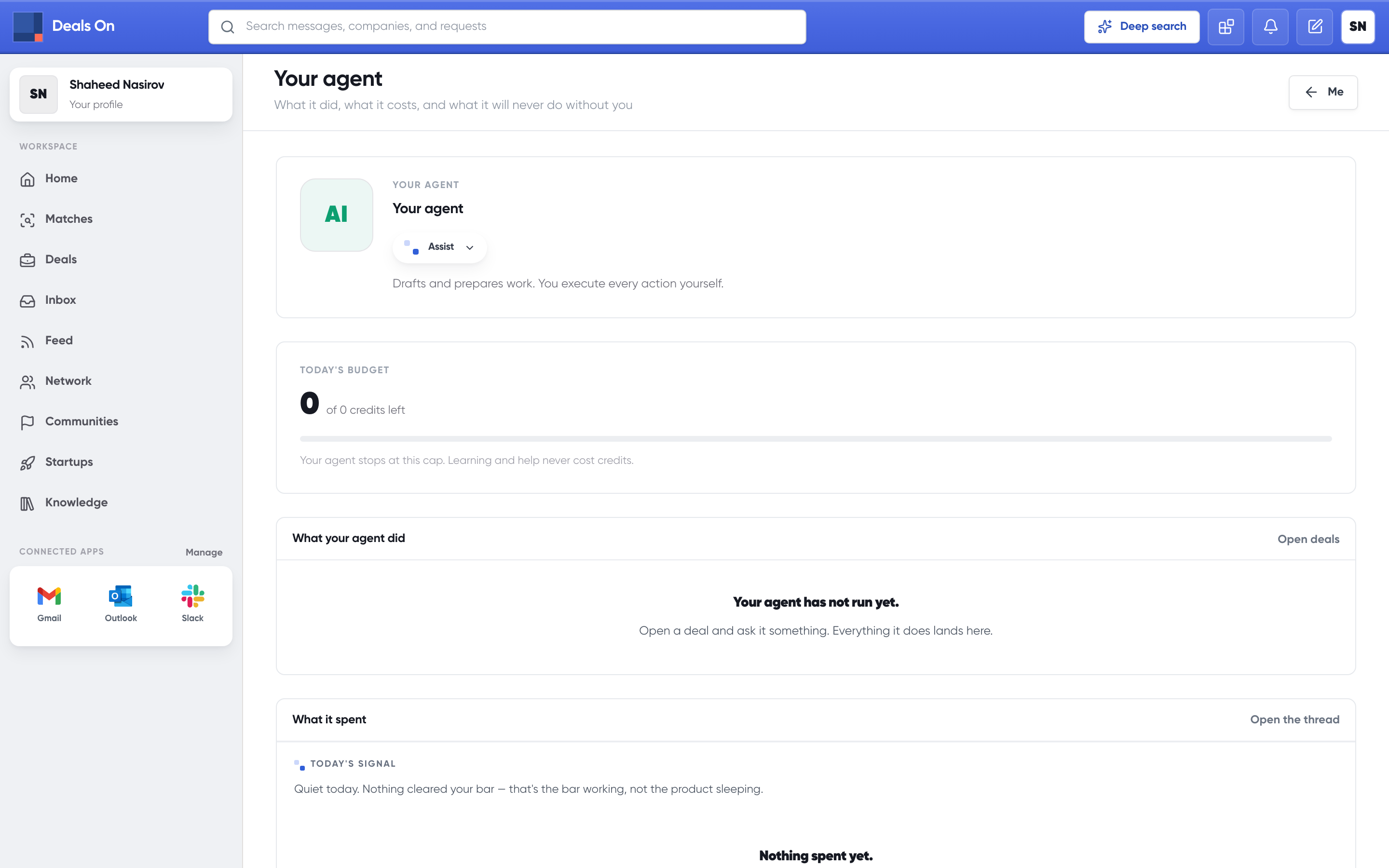
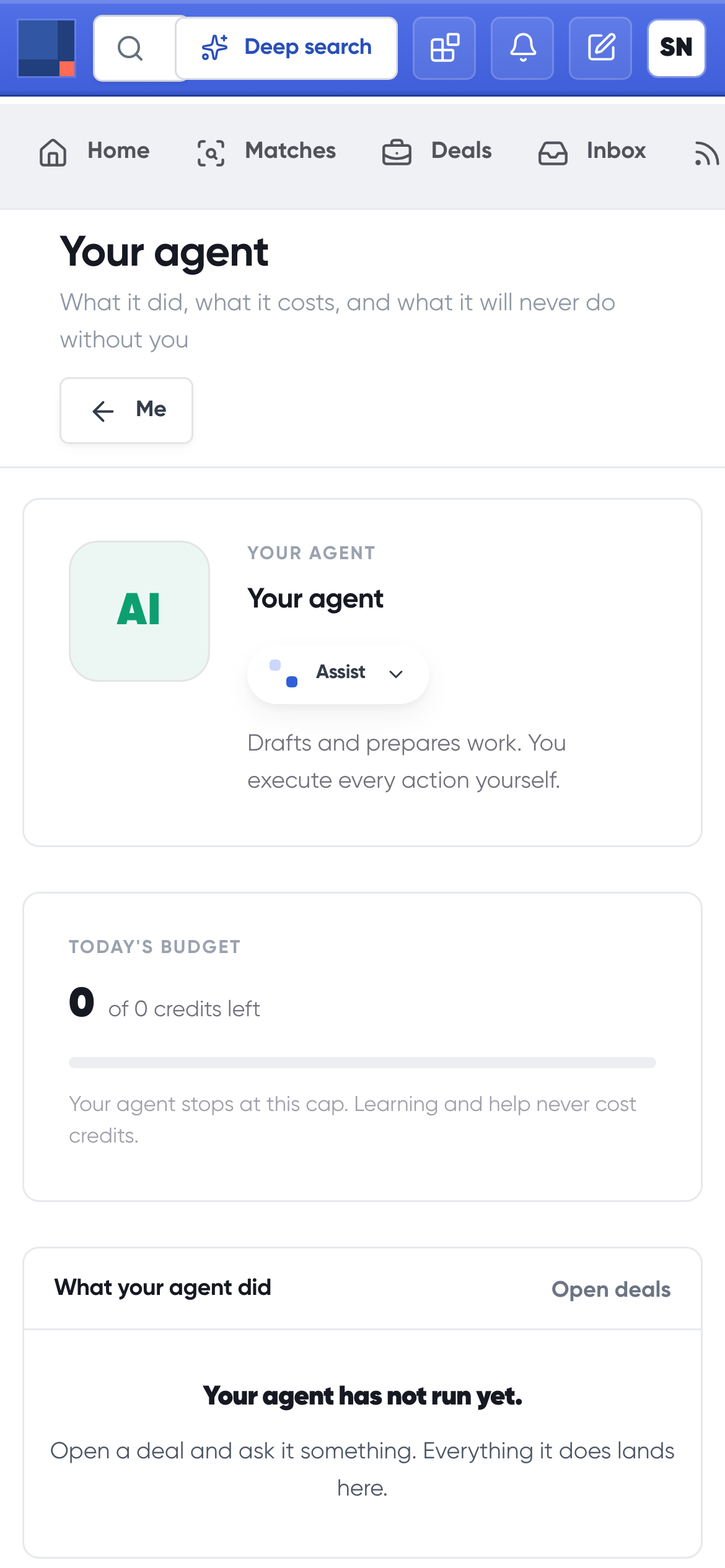
Overnight the agent reads what changed, re-scores what matters, qualifies what arrived, and shows you the way in.
A 2am result is the same result at 8am, minus the resentment. You wake up to what moved and what is waiting, rather than to a backlog.
Then it stops. It proposes; you approve. Sending a message, sharing a deck, booking a meeting — each stays a human decision, and every action is on the record.
What changed since yesterday, across everything you have connected.
Re-scores what matters and shows why each person fits.
Nothing leaves without your approval. Not one message.
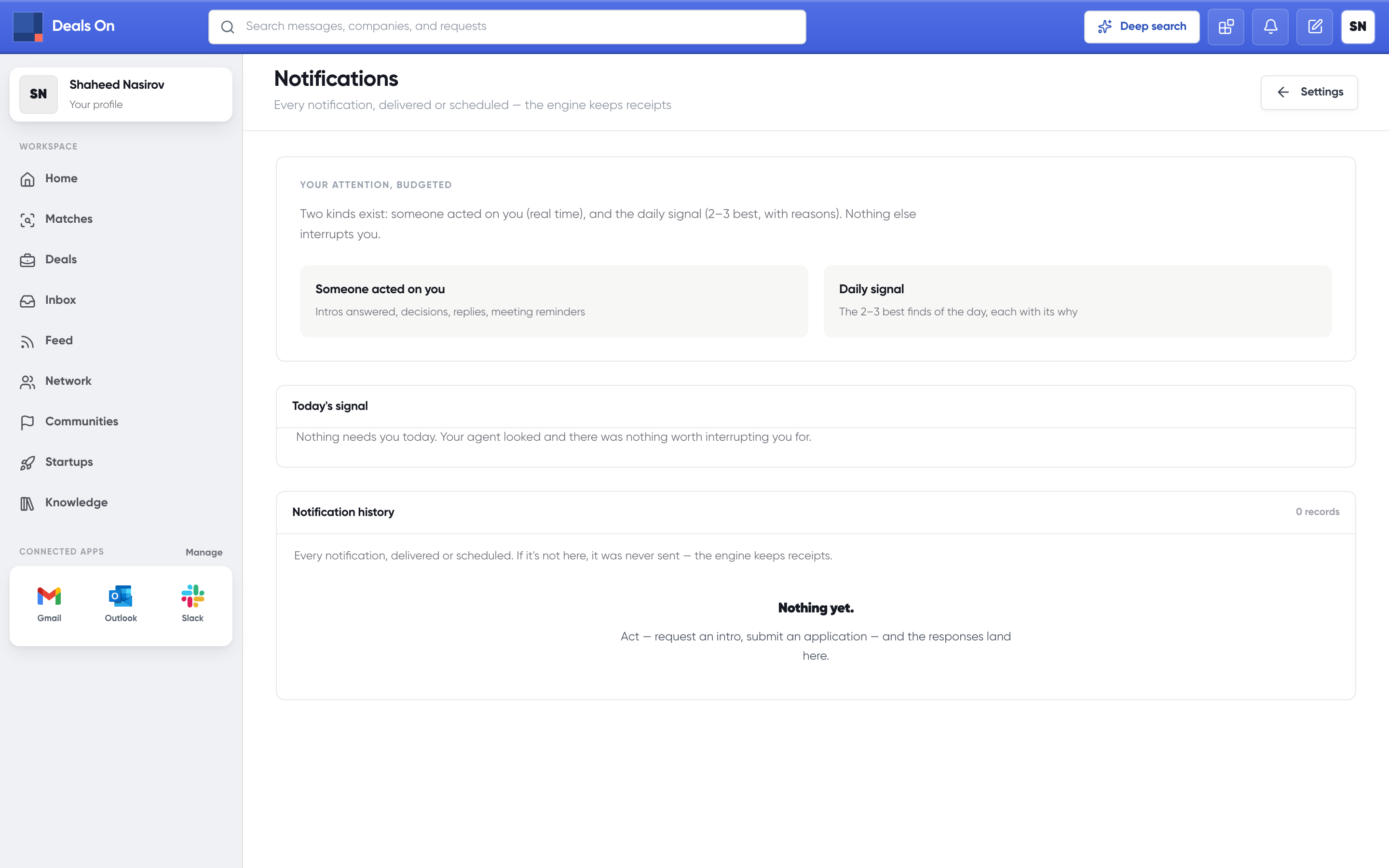
What it decided was worth telling you
The four decisions behind how this behaves.
The cycle finishes before you wake, so the morning starts with answers rather than a queue.
The facts behind each score, never a mystery number.
What it did and when, including the things it decided were not worth interrupting you for.
If nothing moved, it says so and stops. It does not manufacture activity to look busy.
This is not a preference you might leave switched on. The permission we hold for reading your inbox does not include the ability to send anything, and a build check fails if a write scope is ever added to it. Sending is a separate connection with its own consent.
Which is anyone actually running something. The work is real and it is nobody’s full-time job.