
Filter
Hard constraints decide who is eligible. Ineligible matches are removed, not ranked low.
Ranked on hard constraints first. Never a mystery score.
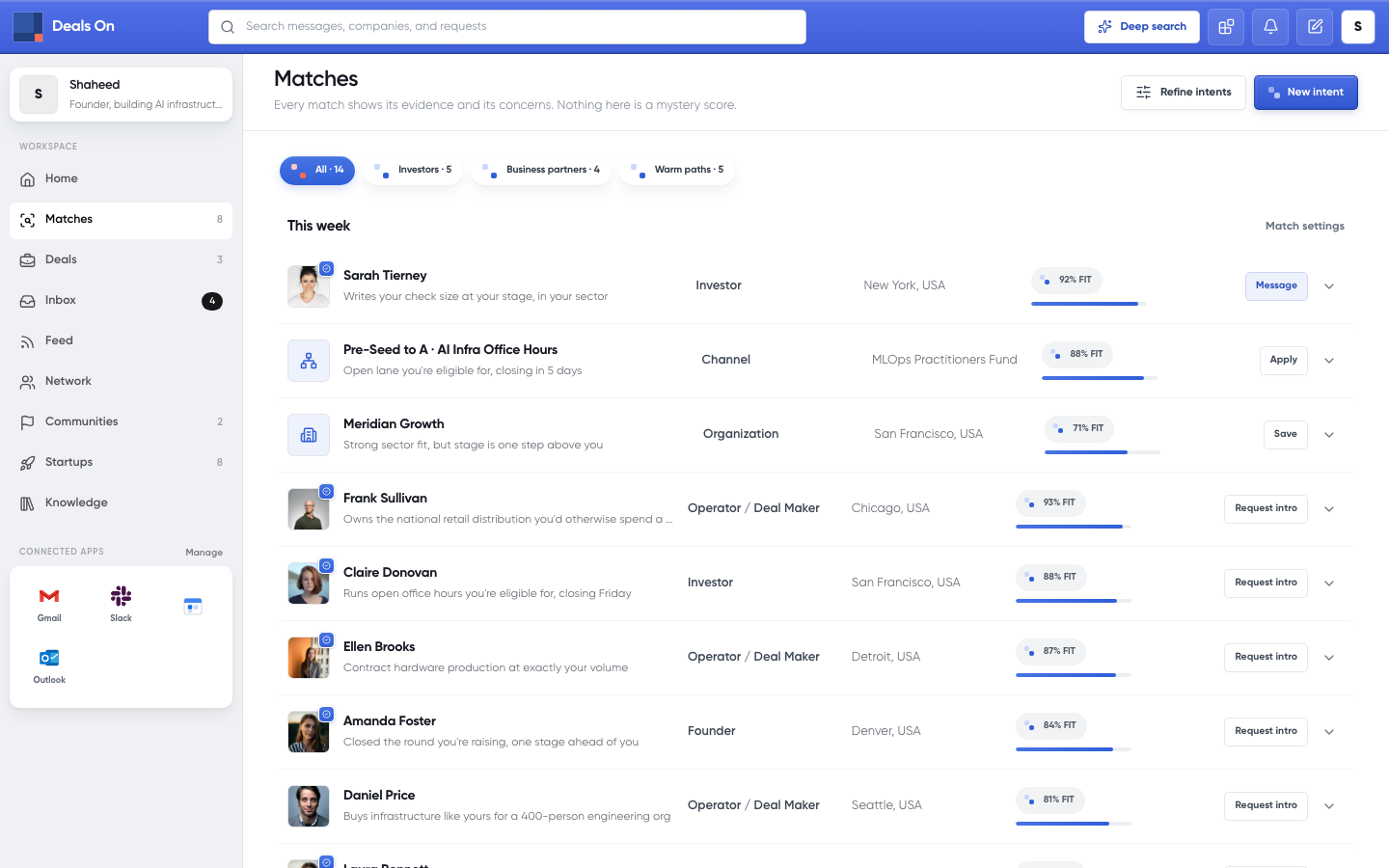
Most matching hands you a percentage and no way to check it. You cannot see what produced it, so you either believe it or you ignore it. Most people ignore it.
Worse, the ones that look good often fail on something basic — wrong stage, wrong geography, a policy that excluded you before anyone looked.
Deals On ranks on hard constraints first, and only then on relationship paths and evidence.
Stage, sector, geography, ticket size, policy, exclusions. Those decide eligibility. Anything that fails them is filtered before ranking begins, so it never reaches your list at all.
The model explains a match. It never overrides the eligibility rules that produced it. And if the stage is wrong, that sits next to the fit instead of hidden behind it.
Hard constraints decide who is eligible. Ineligible matches are removed, not ranked low.
What remains is ordered on relationship paths and real evidence.
Each row carries why it surfaced and what the concern is.
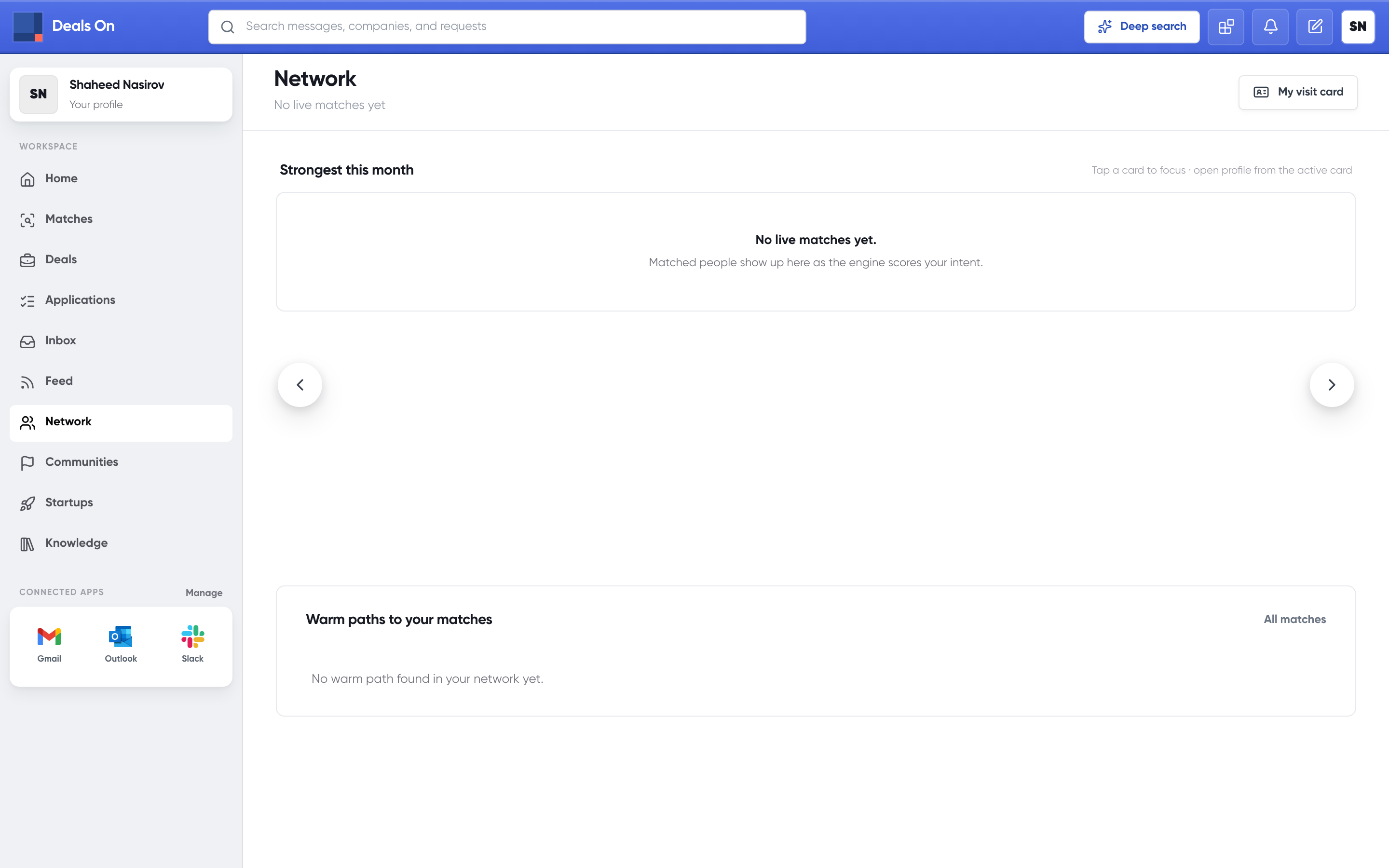
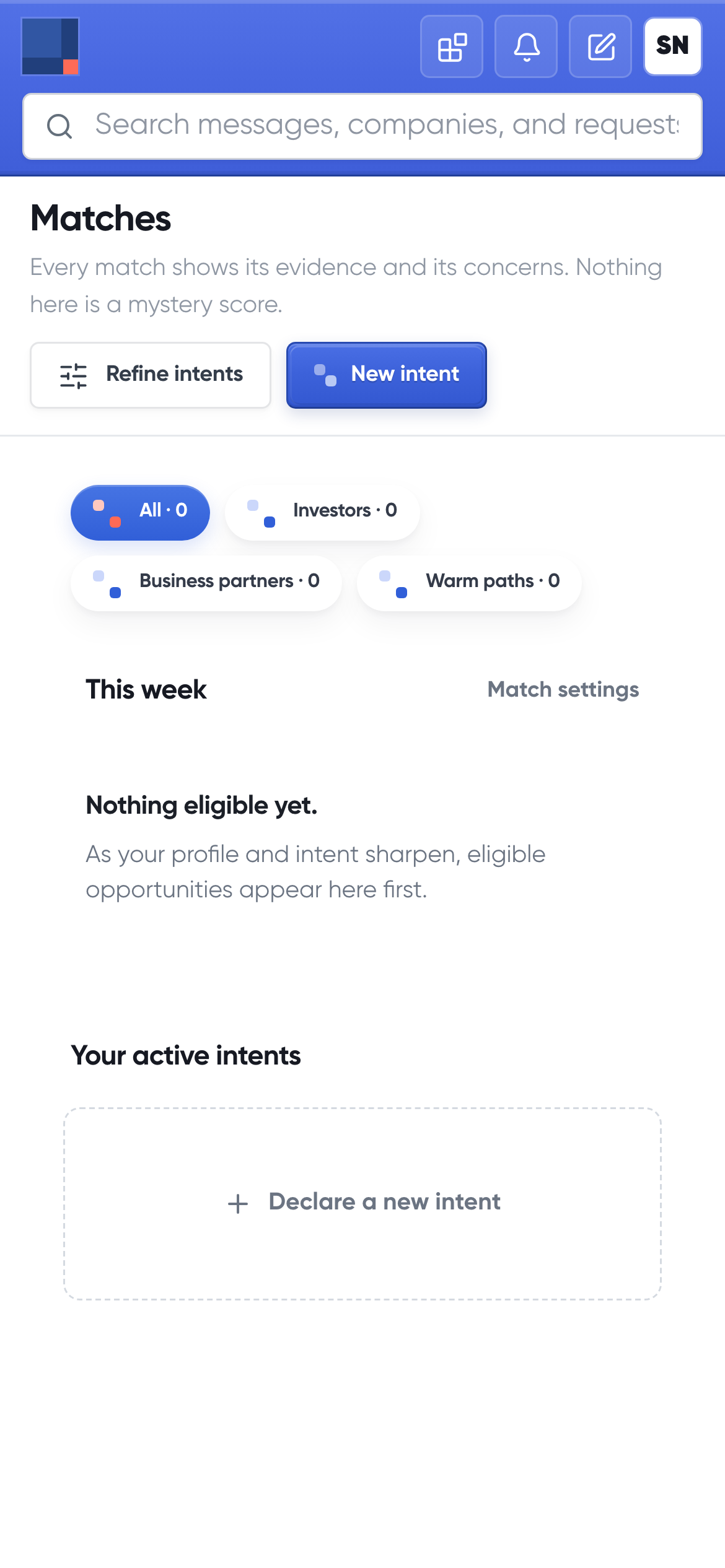
Discover — the same graph, browsed by role
Four things worth knowing before you decide whether this is for you.
Eligibility is a rule, not a weight. A model cannot argue its way past it.
Beside the fit, not underneath it. A 71% with a named stage concern is more useful than an unexplained 90%.
A fund, an open lane and a company can sit in the same ranked list.
Against your current intent, not your job title or last year’s round.
Eligibility is computed from rules you can read. The language model writes the reason afterwards — it has no ability to promote something the rules excluded.
If you have ever taken a meeting that failed on something knowable in advance, this is the part that removes those.