
Publish the lane
A policy, a capacity and a deadline. The terms are stated, not implied.
Publish once. Review one ranked inbox instead of a shared mailbox.
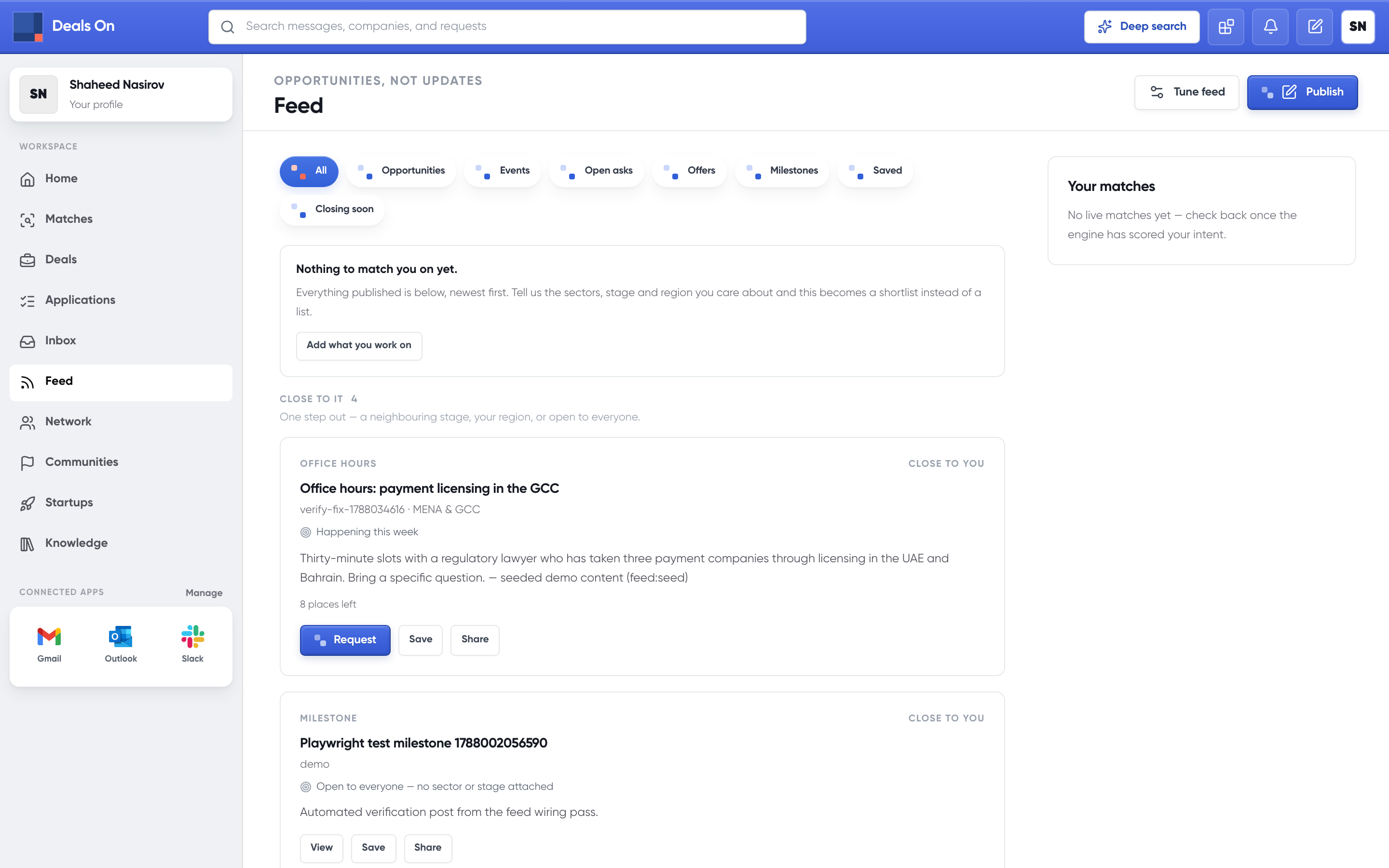
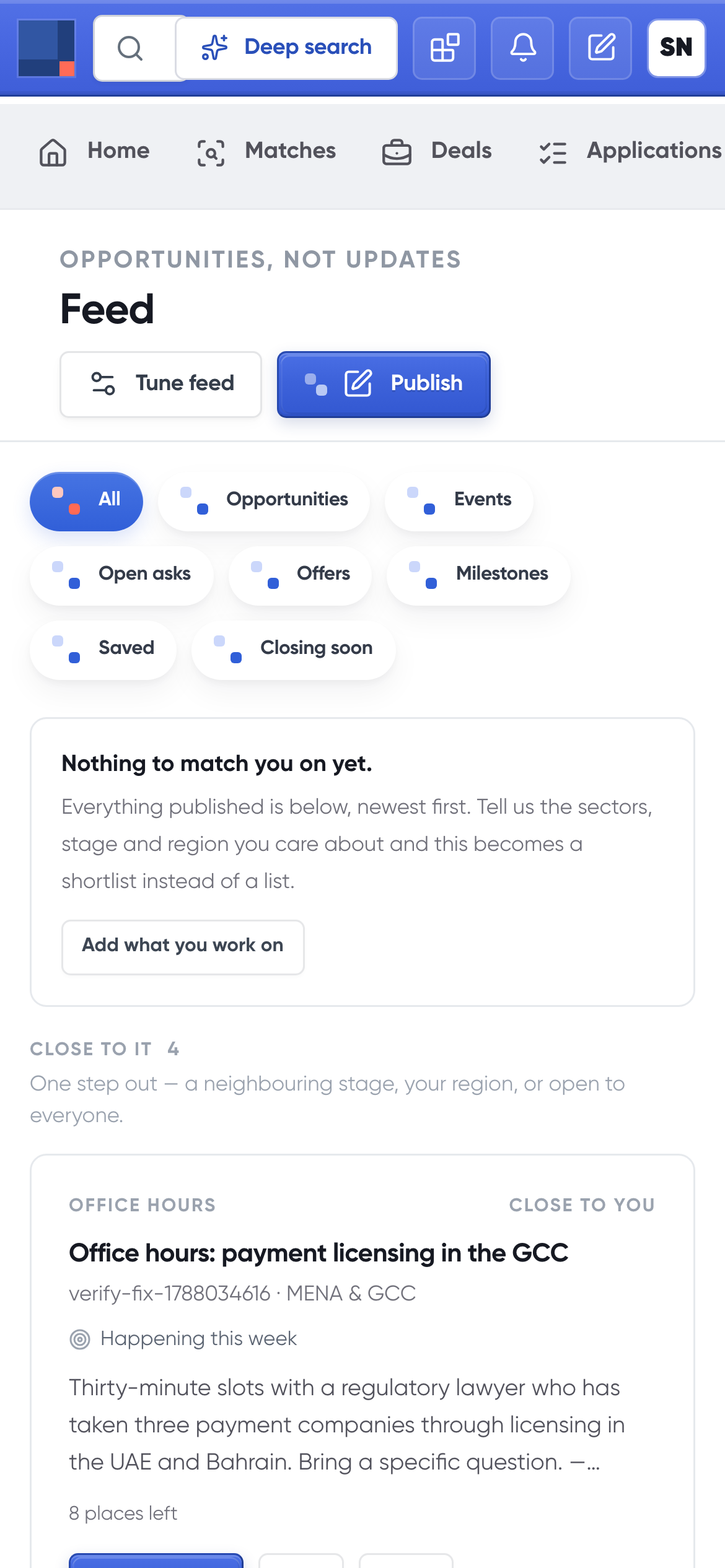
A fund’s office hours. An accelerator intake. A hiring drive. An event’s pitch slots. Every one of them runs on the same improvised stack, and every one of them leaks.
Applicants cannot tell whether they are eligible, so they apply anyway. Organisers read hundreds of applications that never qualified.
Each is published as a lane with a policy, a capacity and a deadline.
People who qualify apply. People who do not are never shown it — which means nobody spends an hour on an application that was excluded by a rule before they started.
Organisers review one ranked inbox instead of a shared mailbox that three people forward between themselves.
A policy, a capacity and a deadline. The terms are stated, not implied.
People who do not qualify never see it, so they never waste the application.
One inbox, ordered, with the evidence attached to each applicant.
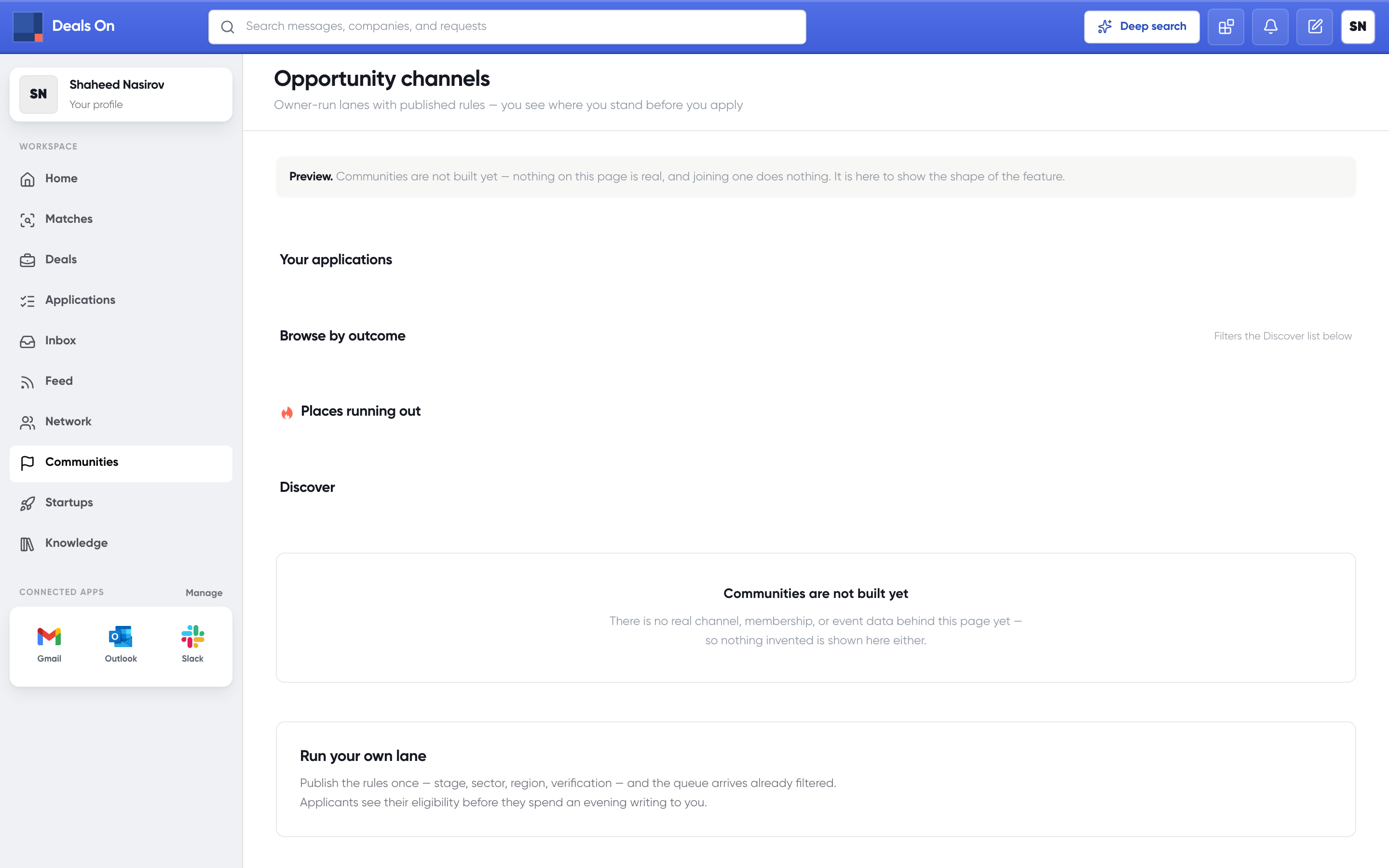
Communities running their own lanes
The four decisions behind how this behaves.
Stage, sector, geography — the same constraint vocabulary the rest of the product uses.
A lane that is full or closed says so, instead of quietly collecting applications.
Ineligible applicants are removed, not scored low and shown anyway.
Instead of a shared mailbox and a spreadsheet that disagree with each other.
When capacity is reached or the deadline passes, the lane stops accepting. Nobody applies into something that already ended.
Funds with office hours, accelerators with cohorts, events with pitch slots, teams hiring more than one role.