
It opens itself
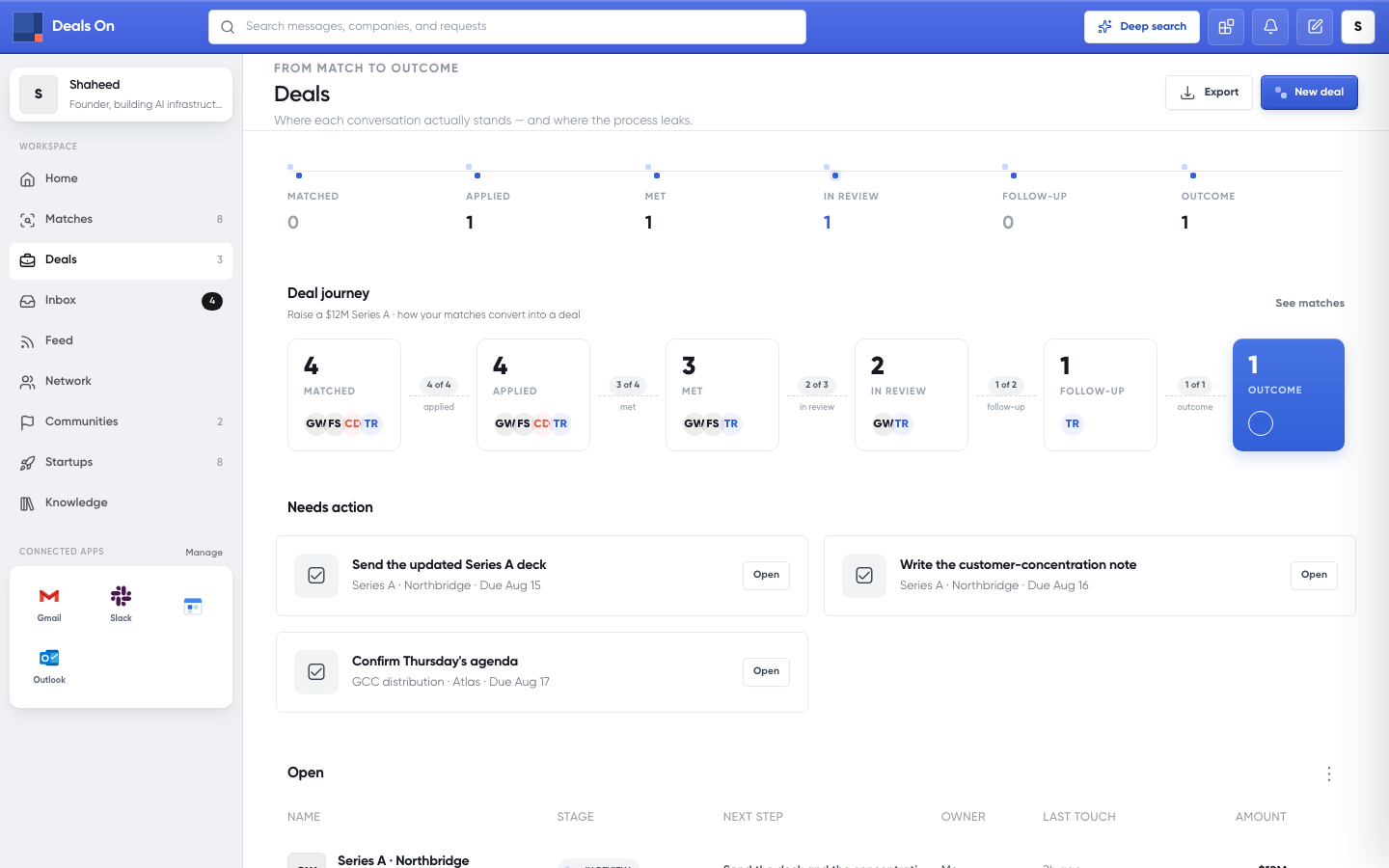
A deal appears when an intro is accepted or an application enters review.
From first reply to closed outcome, on one board.
They die from a Thursday when nobody owned the next step. The thread goes quiet, both sides assume the other is thinking about it, and three weeks later it is too late to reopen.
And the record of what happened lives in someone’s memory, so the next conversation starts from nothing.
One tracker from first reply to outcome: the stage, whose turn it is, the meeting, and the follow-up going stale.
A funding round, a distribution deal and an office-hours application all run on the same seven stages, so you never have to hold three mental models at once.
And it compounds. What happened after two intents met is exactly what makes the next match better — a party who meets scores above one who goes quiet.
A deal appears when an intro is accepted or an application enters review.
Whose move it is, and how long it has been theirs.
The outcome improves the next match, because meeting is evidence and silence is too.
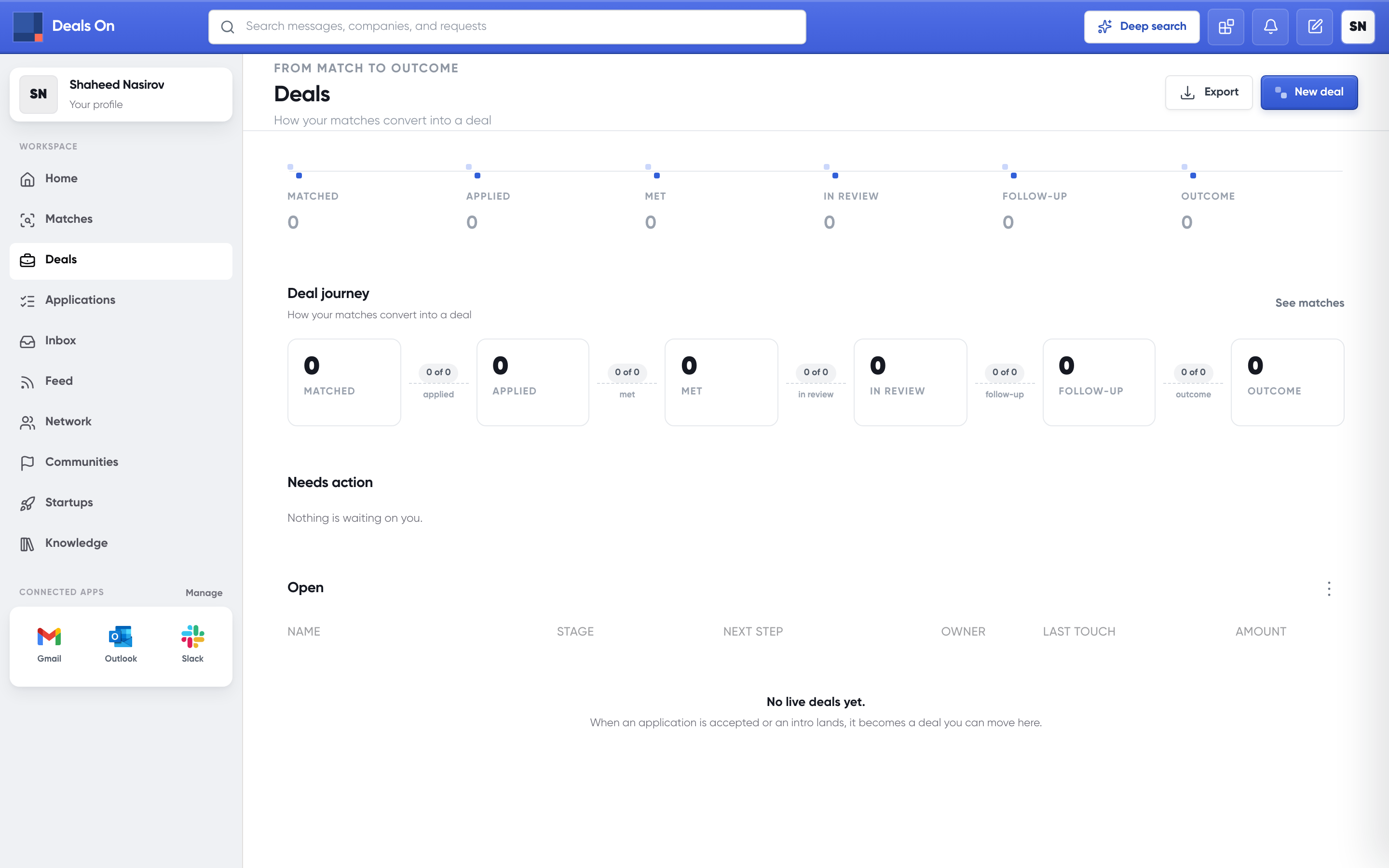
The same board, full width
Four things worth knowing before you decide whether this is for you.
Matched, applied, meeting, review, follow-up, outcome — each one a state, not a label.
Written down rather than remembered, so a quiet week does not lose a deal.
A round, a partnership and a job application do not need three systems.
Readiness scoring already weighs who meets against who ghosts.
Outcomes are not deleted when they are unflattering. The point of a record is that it survives the moment it was inconvenient.
Past three, memory stops being a system. This is the point where things start falling through.