
Connect
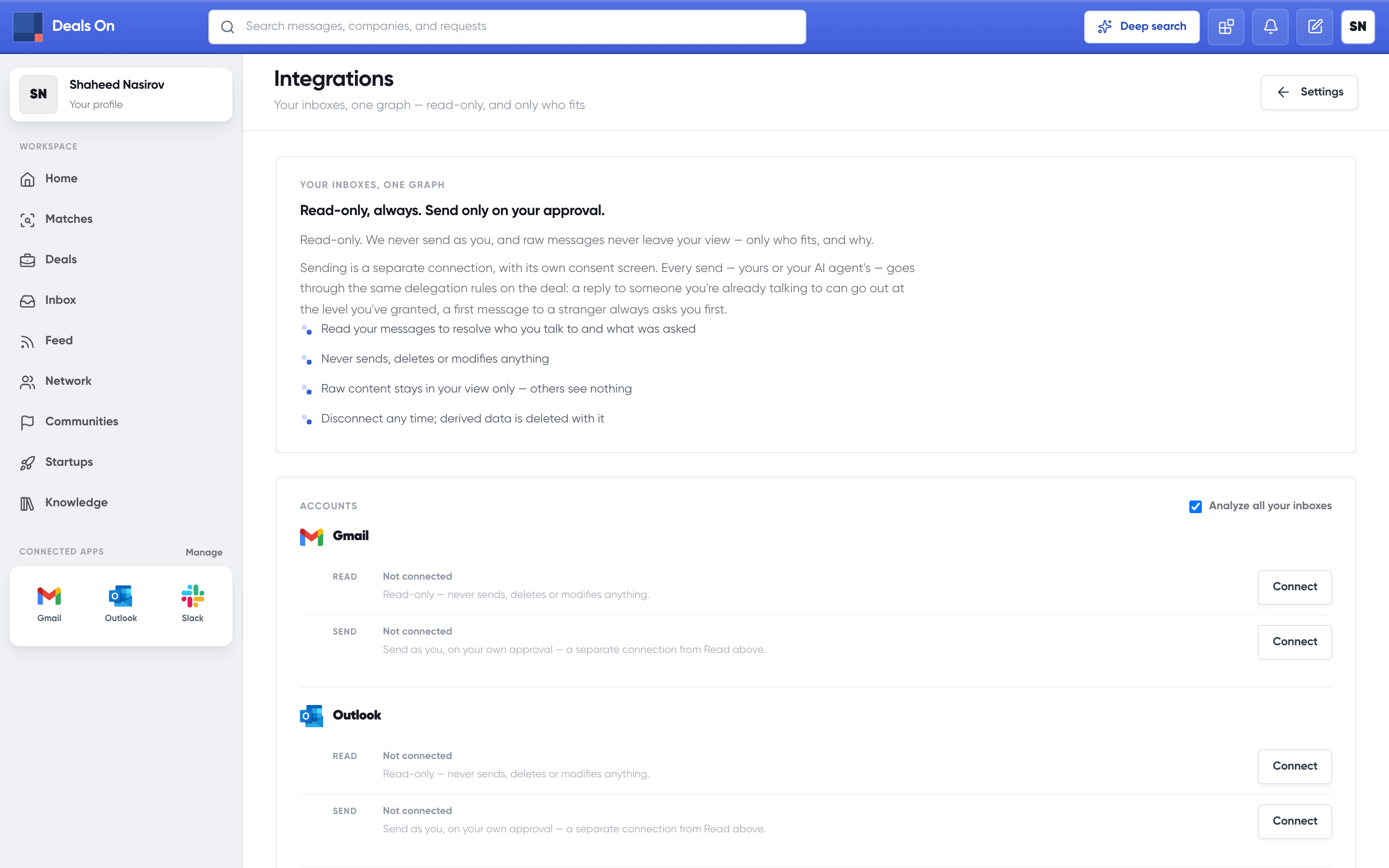
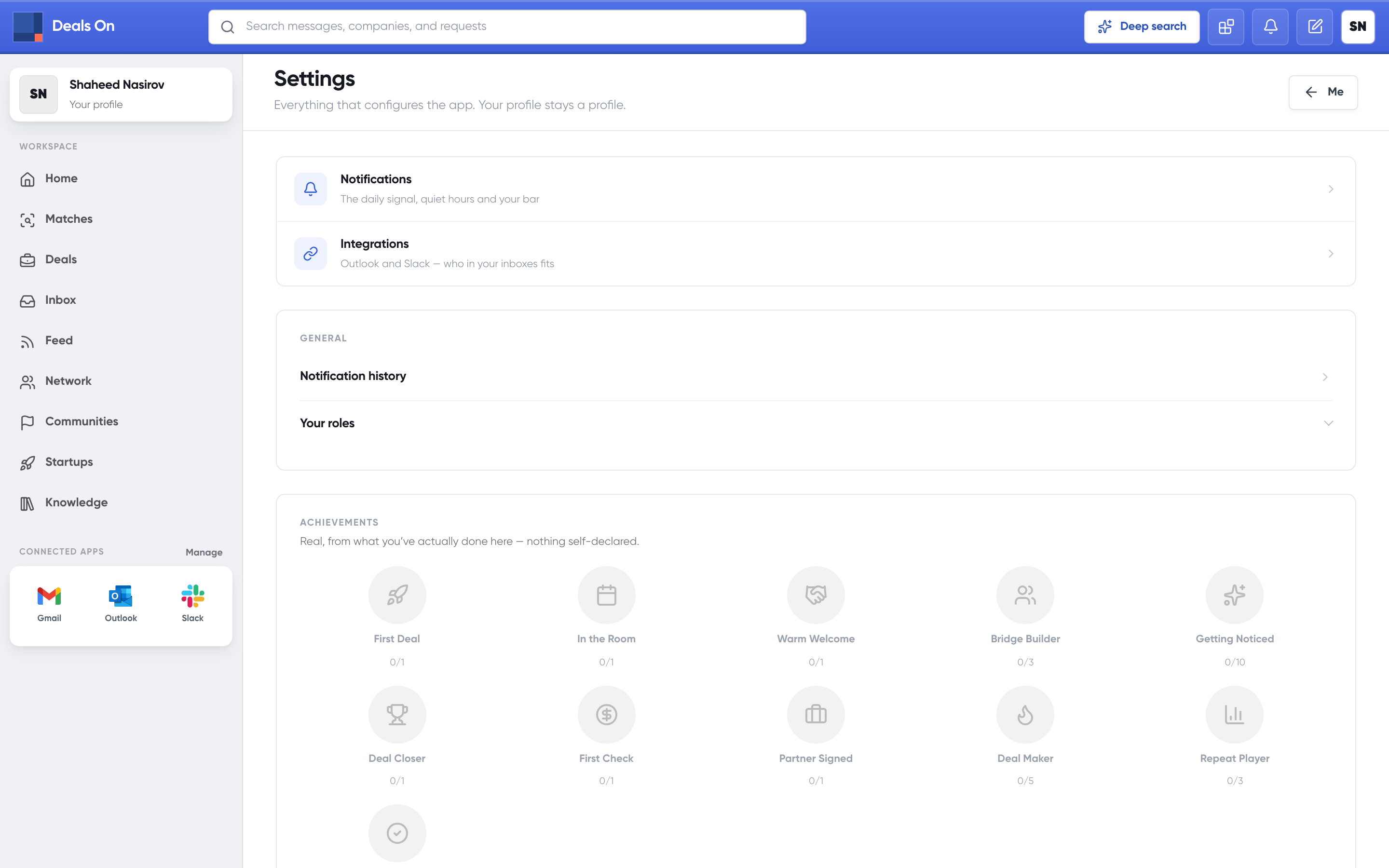
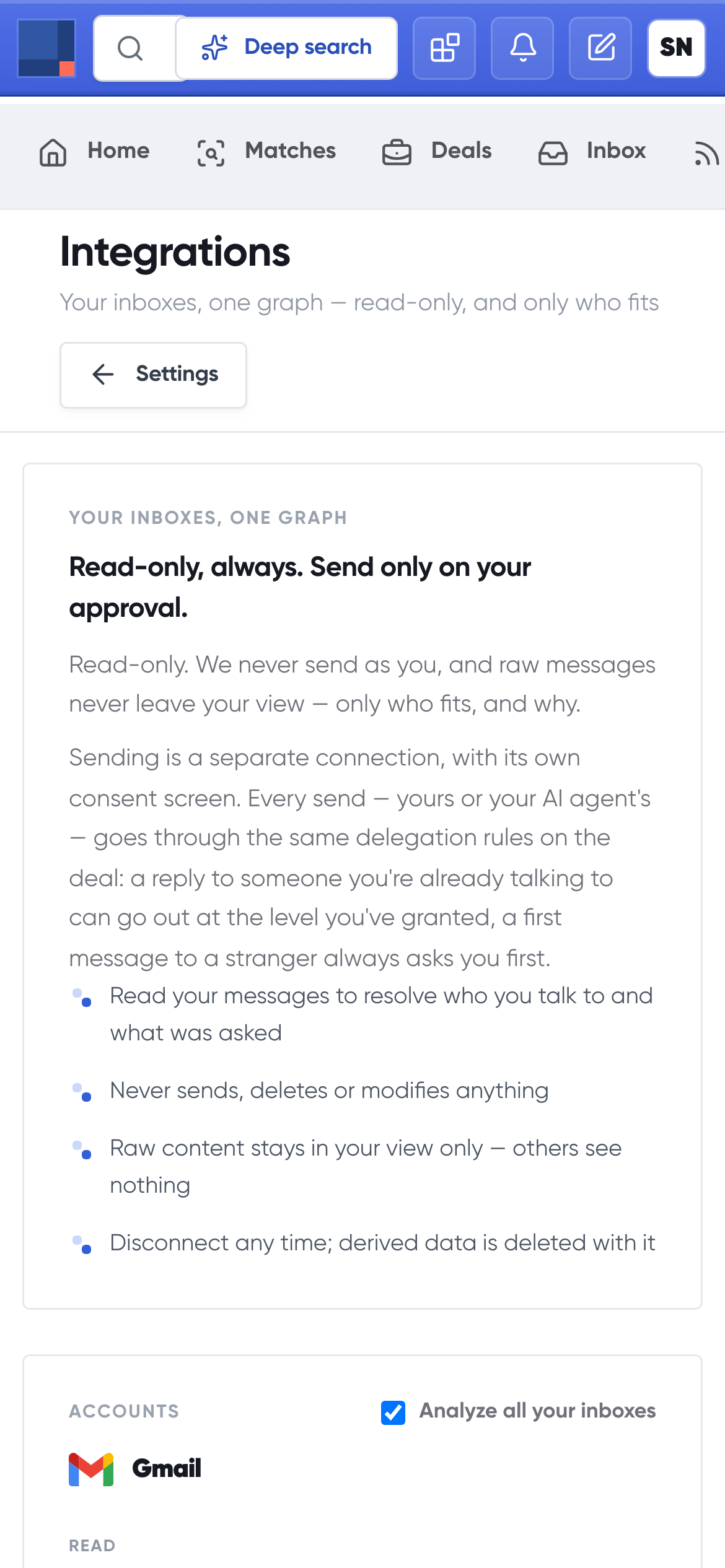
Gmail, Outlook or Slack. Read-only, and you choose which.
Read-only, and it keeps nothing.
You already have the relationships. They are spread across five years of mail and a dozen Slack channels, and nobody — including you — can see the shape of them.
So you reach out cold to someone a colleague speaks to every week, and never find out that the warm path existed.
Connect an inbox and Deals On resolves who you actually talk to, and which of them fit what you are building.
It reads who, when, which direction, and whether something was asked. It keeps none of your messages.
That is not a promise on a policy page. The part of the system that scores relationships has nowhere to put a subject line or a body — the type it passes around has no field for content, so it cannot leak one by accident. A build check fails if anyone adds one.
Gmail, Outlook or Slack. Read-only, and you choose which.
Who you actually talk to, merged into one person across all three.
Which of them fit what you declared — and who stands between you and who you need.
Where inbox analysis is switched off entirely
The four decisions behind how this behaves.
Never sends, deletes or modifies anything. The token it holds cannot do those things.
For Gmail we request the narrowest scope that exists — it is technically incapable of returning a message body.
Switch analysis off and no account is read at all. Not a hidden result on an analysis that still ran.
Tokens and cached analysis go immediately, along with identifiers learned only from that source.
Opening one conversation fetches it live and shows it to you. It is never written to our database and never becomes part of anyone else’s graph. Read, show, discard.
If you have been working for more than a couple of years, you know more useful people than you can recall on demand.